
Date: Dec 18, 2025
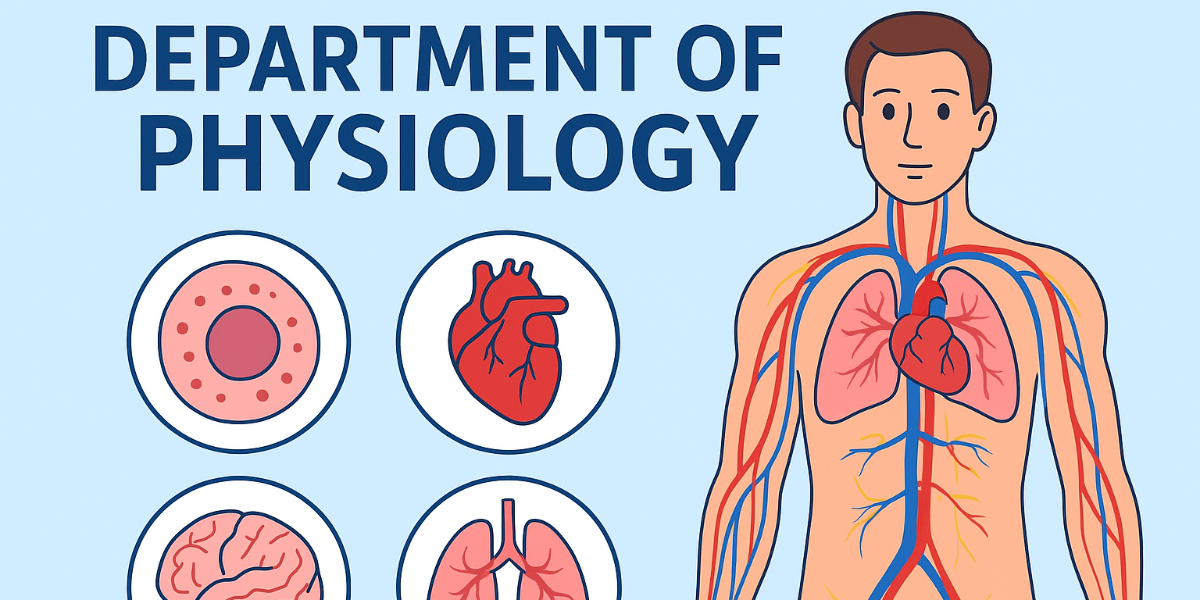
The Department of Physiology plays a fundamental role in medical education by teaching students how the human body functions in health. As a core basic medical science, physiology provides the essential foundation needed to understand disease processes, clinical symptoms, and patient management. Through lectures, practical demonstrations, and integrative learning, students develop a strong understanding of biological systems and their mechanisms.
Physiology bridges the gap between basic sciences and clinical practice, offering insights into muscle movement, nerve conduction, blood circulation, respiration, digestion, hormonal regulation, and more.
Physiology is the scientific study of normal body functions. It focuses on understanding how different systems work individually and together to maintain homeostasis. For medical students, physiology is crucial because it helps interpret clinical signs, understand pathological changes, and make informed decisions in patient care.
In the MBBS curriculum, physiology is taught in early foundational years, preparing students for more advanced clinical subjects.
Students explore how cells operate, communicate, and regulate internal processes. Topics include membrane transport, cellular signaling, muscle contraction, and metabolic activities.
The department covers all major systems of the human body, including:
Understanding the coordinated function of these systems is essential for diagnosing and managing health conditions.
Students learn how neurons transmit signals, how reflexes work, and how the brain controls body activities.
This area focuses on hormones, glands, and regulatory mechanisms that maintain internal balance.
A key focus is placed on heart function, blood pressure regulation, lung volumes, gas exchange, and circulation.
Well-structured lectures help students understand complex concepts through illustrations, explanations, and real-life examples.
Hands-on demonstrations give students the opportunity to:
Practical exposure strengthens theoretical knowledge and sharpens clinical observation skills.
Group-based learning encourages active participation, critical thinking, and problem-solving based on physiological concepts.
Case scenarios are used to connect physiological knowledge with clinical situations, enhancing diagnostic reasoning.
Physiology is taught alongside anatomy and biochemistry to ensure students build a complete understanding of the human body.
The Department of Physiology provides:
These facilities ensure an effective and engaging learning experience for MBBS students.
Physiology is essential for every medical professional because it:
A strong foundation in physiology leads to better clinical judgment and safe medical practice.
Physiology opens multiple academic and professional paths, such as:
This discipline also supports careers in research, healthcare innovation, and clinical diagnostics.
The Department of Physiology plays an essential role in shaping competent medical graduates. Through detailed teaching, practical exposure, and integrated learning, students acquire a deep understanding of how the human body functions. This knowledge forms the scientific backbone of clinical medicine.
Physiology empowers future doctors with the clarity and confidence needed to evaluate health, diagnose disease, and provide effective patient care.
Relevant Blogs
Understanding the Science of Disease
Dec 05, 2025