
Date: Dec 05, 2025
The Department of Pathology plays a central role in medical education by helping students understand how diseases develop, progress, and impact the human body. As a bridge between basic sciences and clinical practice, pathology provides the foundation necessary for accurate diagnosis and effective patient care. Through comprehensive teaching, practical laboratory exposure, and clinical correlation, students gain essential skills that shape them into informed and competent future doctors.
Pathology is the scientific study of disease. It focuses on the structural and functional changes that occur in tissues, organs, and cells when illness affects the body. In the MBBS program, pathology helps students understand the biological basis of diseases, providing the knowledge they need to interpret clinical findings and laboratory results correctly.
This subject prepares medical students to recognize early signs of disease, understand their mechanisms, and apply this knowledge in real-world clinical scenarios.
General Pathology introduces students to fundamental disease processes such as inflammation, cell injury, immunological reactions, tissue repair, and neoplasia. These concepts form the basis upon which all other clinical subjects are built.
This branch deals with microorganisms that cause infectious diseases. Students learn about bacteria, viruses, fungi, and parasites through laboratory techniques including staining, culturing, and diagnostic testing. Proper understanding of infectious agents ensures better prevention, diagnosis, and treatment.
Hematology focuses on disorders related to blood and bone marrow. Students gain skills in interpreting blood tests, identifying anemias, understanding coagulation abnormalities, and examining bone marrow samples. These skills are essential for diagnosing a wide range of clinical conditions.
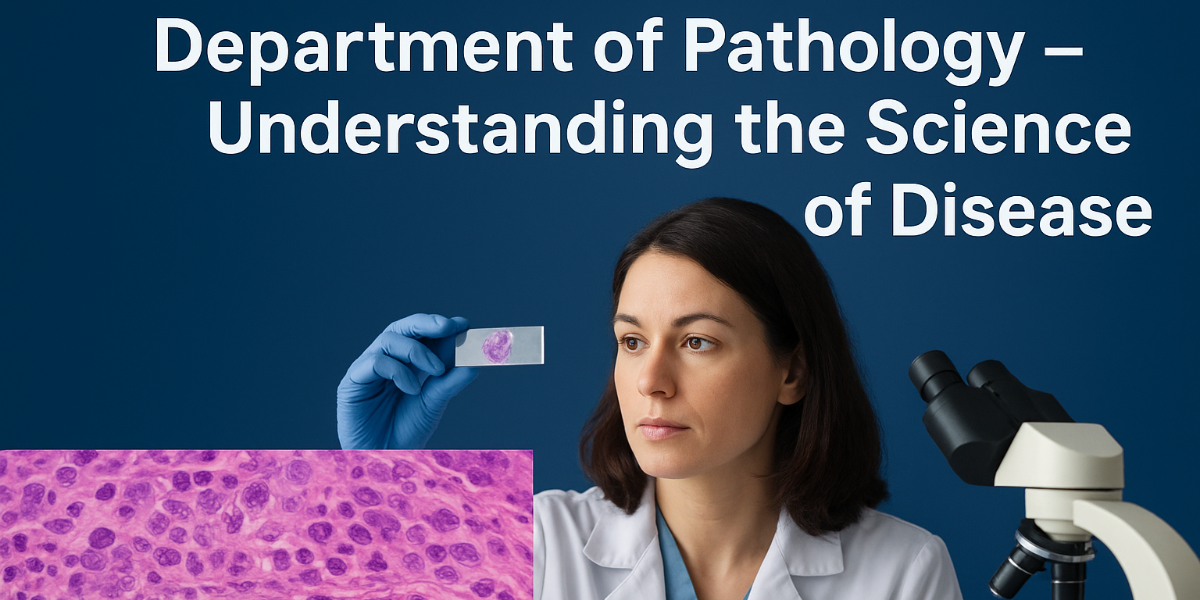
Histopathology involves examining tissues under the microscope to detect abnormalities. Students observe tissue processing techniques, slide preparation, staining methods, and microscopic interpretation. This branch is essential for diagnosing cancers, inflammatory diseases, and organ-related disorders.
Chemical Pathology teaches students about biochemical changes in the body associated with disease. It includes the interpretation of tests such as liver function tests, renal profiles, blood glucose levels, hormonal assays, and lipid panels. These investigations are vital for clinical evaluation and disease management.
Faculty members deliver well-structured lectures that help students understand complex topics in an organised and comprehensive manner.
Students gain hands-on experience using microscopes, analysing samples, and performing diagnostic tests. Practical training allows them to apply theoretical knowledge in real laboratory settings.
Structured case discussions help students correlate pathological changes with clinical symptoms. This approach strengthens critical thinking and diagnostic skills.
Regular tutorials and demonstrations allow students to observe laboratory processes, specimen preparation, and diagnostic equipment handling.
By linking pathology content with clinical rotations, students learn how laboratory findings relate to patient signs, symptoms, and overall management.
The Department of Pathology provides a well-equipped environment that enhances teaching and learning. Facilities include:
These resources ensure students receive high-quality education and practical training.
Pathology is the foundation of clinical medicine. It helps students:
Without a strong understanding of pathology, effective diagnosis and treatment are not possible.
A strong foundation in pathology opens multiple career paths, including:
These careers contribute significantly to medical science and patient care.
The Department of Pathology plays a vital role in shaping knowledgeable and skilled medical graduates. Through comprehensive teaching, hands-on laboratory training, and clinical integration, students develop the ability to understand diseases at a deeper level and apply that knowledge in patient care.
Pathology is the scientific backbone of medicine, guiding doctors toward accurate diagnosis, effective treatment, and improved patient outcomes.read more
Relevant Blogs
Understanding the Science of Disease
Dec 05, 2025