
Date: Nov 22, 2025
The Department of Biochemistry is fundamental to the early years of medical education, offering students the deep biochemical insights that explain how life works at the molecular level. In an MBBS program, biochemistry bridges the gap between molecular science and clinical practice, helping future doctors understand metabolism, molecular pathology, and the biochemical basis of disease.
Biochemistry is the science of life’s chemical processes. It explores the structure and function of biomolecules — such as proteins, nucleic acids, lipids, and carbohydrates — and studies how these molecules interact in pathways that sustain cellular life. In medical education, biochemistry addresses topics such as:
Biochemistry offers the molecular-level foundation that underlies physiology and pathology. By studying how cells produce energy, replicate, and respond to signals, medical students gain insights into the molecular mechanisms of health and disease.
Understanding biochemical mechanisms is essential for:
In modern curricula, biochemistry is integrated with physiology, pathology, and pharmacology. This interdisciplinary approach allows students to see how biochemical pathways relate to organ function, disease states, and therapeutic interventions.
To effectively teach biochemistry, the department employs a variety of learning methods:
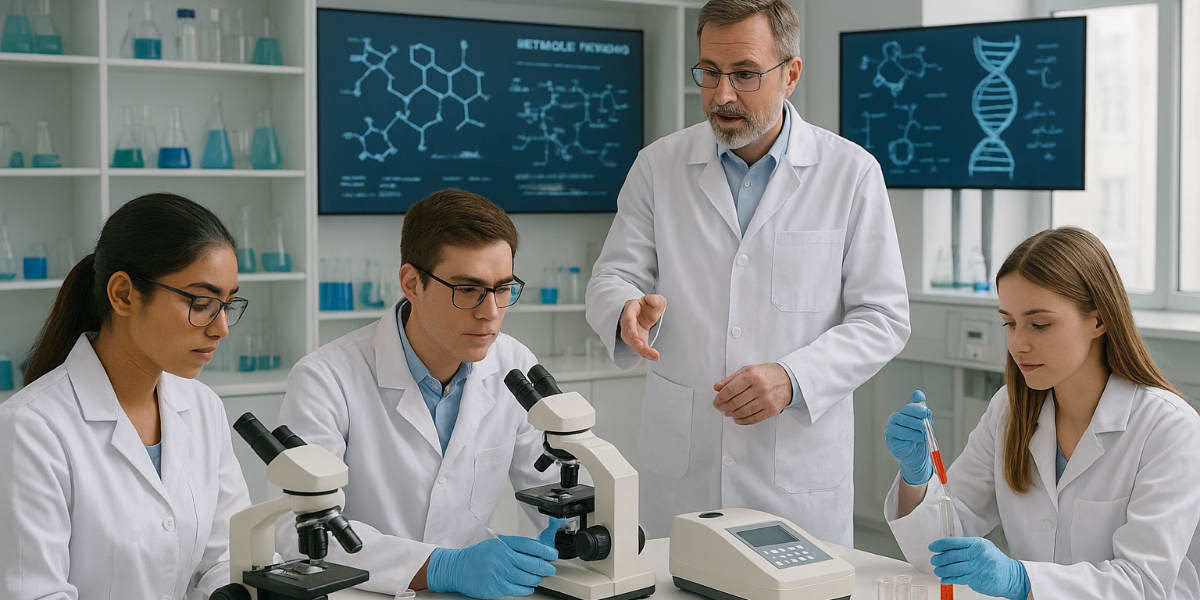
The department offers a well-equipped lab environment to support practical biochemistry training:
These lab experiences allow students to connect theoretical biochemical pathways with real-world laboratory techniques and diagnostic tests.
The Department of Biochemistry encourages research and scholarly growth by facilitating student involvement in:
This research-centered approach nurtures scientific inquiry, analytical skills, and innovation.
The faculty in the Department of Biochemistry includes biochemists, molecular biologists, clinicians, and educators who guide students through lectures, labs, and research. Their expertise helps students translate biochemical theory into clinical relevance, fostering a deeper understanding of how molecular processes underlie pathology and therapy.
The Department of Biochemistry is integral to building a strong molecular foundation for medical students. Through a rigorous curriculum, hands-on practical training, and a research-oriented environment, biochemistry empowers future physicians to understand disease at the molecular level. Mastery of these concepts not only strengthens clinical acumen but also drives innovation in diagnostics, therapeutics, and biomedical research. Read More ..
Relevant Blogs
No relevant blogs found.