
Date: Nov 12, 2025
The Department of Anatomy is one of the core pillars of early medical training, offering students a deep understanding of the human body’s structure and organization. As a central component of the MBBS curriculum, Anatomy provides the essential framework that future doctors rely on throughout their careers—whether diagnosing disease, performing surgery, or interpreting clinical imaging.
Anatomy is the scientific study of the structure of the human body. It covers all levels of organization, from microscopic cells and tissues to organs and entire systems.
The subject is broadly divided into:
Together, these branches give students a complete picture of how the body is built and how its structures relate to function and disease.
Anatomy forms the backbone of all medical sciences. Understanding where organs are located, how tissues are arranged, and how systems connect is critical for every clinical decision a doctor makes. It sets the stage for studying physiology, pathology, surgery, radiology, and almost every specialty.
Anatomy directly supports clinical reasoning.
Students learn:
A strong command of Anatomy ensures medical graduates can interpret symptoms and design appropriate treatment plans.
Modern Anatomy teaching emphasizes integration with clinical sciences. Students explore real clinical cases, radiological images, and surgical correlations to understand the direct link between anatomical structure and clinical application.
To make Anatomy both engaging and comprehensive, the department uses diverse teaching strategies:
Covering core structures, developmental processes, and clinical correlations.
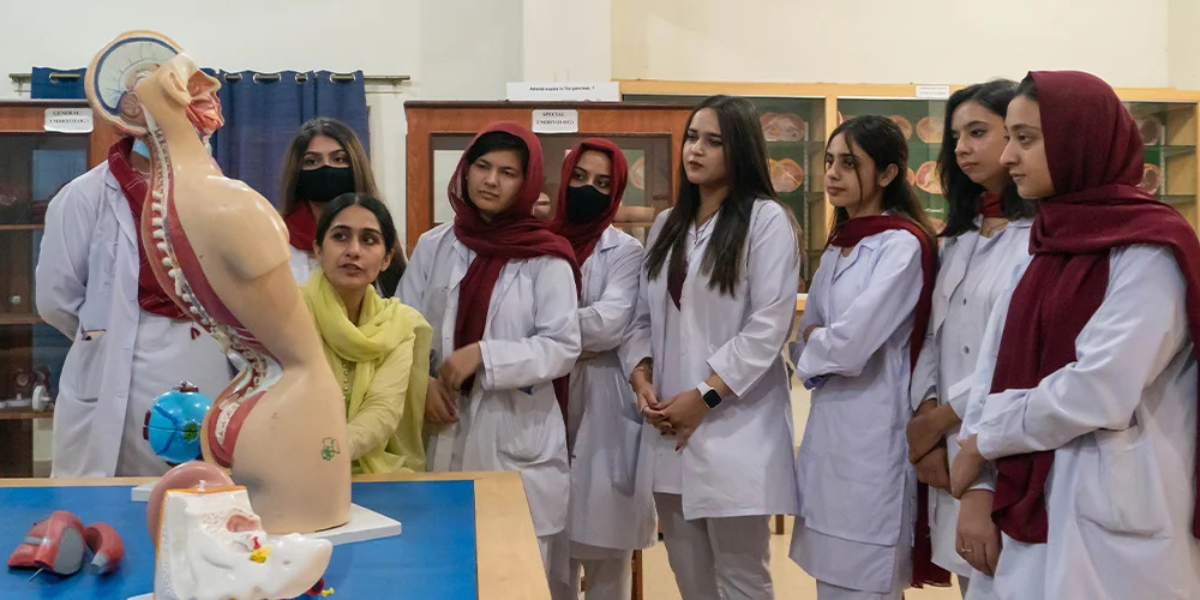
The dissection hall allows students to explore human structures in detail, giving them firsthand experience with organs, tissues, and anatomical relationships.
Students examine tissue slides under the microscope, learning how cellular arrangement affects organ function.
These sessions promote deeper understanding, peer learning, and analytical thinking.
Modern digital tools—3D anatomy software, virtual dissections, and animations—help students visualize complex structures with clarity.
The department is equipped with advanced facilities designed to enhance hands-on learning:
These facilities provide students with the practical skills essential for understanding real-world clinical scenarios.
The Department of Anatomy encourages scientific inquiry and academic excellence. Students and faculty engage in research on:
Research initiatives help students develop critical thinking, data analysis skills, and a passion for medical innovation.
Highly qualified and experienced faculty members guide students through their academic journey. Professors, demonstrators, and lab instructors provide dedicated support during dissections, lectures, lab sessions, and research projects. Their expertise bridges basic science with clinical practice, preparing students for advanced medical training.
The Department of Anatomy serves as the foundation upon which the entire medical profession is built. Through a structured curriculum, immersive lab experiences, and supportive faculty, the department equips students with essential knowledge of the human body. By mastering Anatomy, future doctors gain the confidence and competence needed to excel in clinical practice, surgery, diagnostics, and medical research. Read More ..
Relevant Blogs
No relevant blogs found.