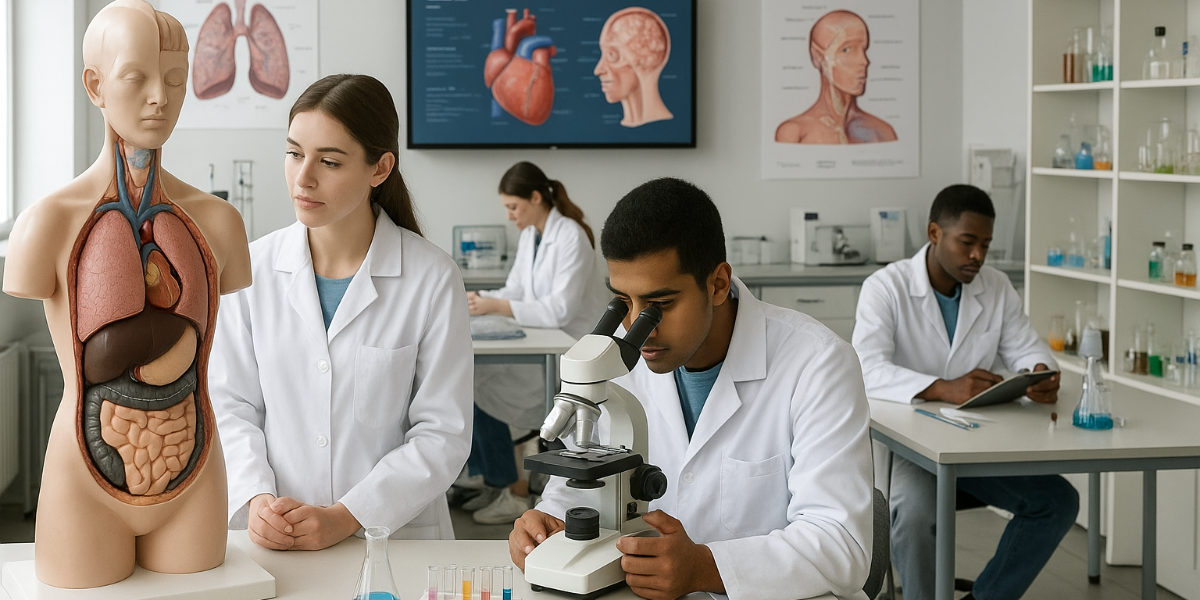
Image

Basic Medical Sciences: The Foundation of Medical Education

Date: Nov 05, 2025

Basic Medical Sciences form the heart of the early years in a medical curriculum, laying the groundwork for understanding how the human body is structured, how it works, and how disease affects it. In an MBBS program, these sciences provide the essential knowledge needed by future clinicians, researchers, and health professionals.

What Are Basic Medical Sciences?

The Basic Medical Sciences include disciplines such as Anatomy, Physiology, Biochemistry, Pharmacology, Pathology, Forensic Medicine, and Community Medicine. These subjects help students grasp fundamental concepts of life: the architecture of the body, the chemistry of cells, how organs function, how drugs work, how diseases develop, and how health interacts with the community and environment.

Why Basic Medical Sciences Matter

  1. Foundational Knowledge
    Understanding the body at a molecular, cellular, and systemic level is critical. Anatomy teaches structure, physiology explains function, and biochemistry helps unpack the molecular reactions that sustain life.
  2. Link to Clinical Practice
    Basic sciences act as a bridge to clinical medicine. Without a strong grasp of these concepts, diagnosing disease, understanding pathology, or prescribing therapy becomes far more difficult.
  3. Integration and Curriculum Design
    Many medical schools use an integrated curriculum, where basic medical sciences are woven together and taught alongside clinical sciences. This structure enhances relevance and helps students appreciate the interconnection between foundational science and patient care.
     

How Students Learn Basic Medical Sciences

To help students internalize these core subjects, medical colleges adopt a range of teaching strategies:

  • Lectures and Seminars: Cover core theory, molecular pathways, and clinical implications.
  • Problem-Based Learning: Students analyze clinical cases that require understanding of biochemical or physiological mechanisms.
  • Small-Group Discussions: Encourage deeper engagement and peer learning.
  • Laboratory Work: Practical experiments let students observe physiological functions, biochemical reactions, and drug effects directly.
  • Simulations and Multimedia: Modern methods, including 3D models, animations, and virtual labs, support the visualization of complex structures and processes.
     

Laboratory Infrastructure and Practical Training

Hands-on experience is critical in basic medical sciences. Laboratories may include:

  • Dissection halls and anatomical models (for anatomy)
  • Tissue culture and molecular biology setups (for biochemistry)
  • Physiological experiment stations (for studying cardiovascular, pulmonary, and nervous systems)
  • Pharmacology labs (for drug-receptor studies, dose‑response experiments, and toxicology)
  • Pathology labs with microscopes and slides (for tissue and disease study)
     

These lab experiences cement theoretical lessons by allowing students to observe, manipulate, and experiment.

Research and Academic Growth

The Basic Medical Sciences department encourages research, enabling students to:

  • Explore molecular mechanisms of diseases
  • Study drug interactions and develop new therapeutic ideas
  • Participate in public health and community-based research
  • Present findings in seminars or academic events
     

This research-oriented approach nurtures scientific thinking, data analysis skills, and a deeper curiosity for medical innovation.

The Role of Faculty

The department is staffed by professors, clinicians, and scientists who bring both academic rigor and practical insight. They mentor students through lectures, lab sessions, research projects, and critical discussions. Their guidance helps students transition from pure basic science into clinical reasoning and professional decision-making.

Conclusion

Basic Medical Sciences are more than just the first step in the MBBS journey — they are the foundation upon which all clinical knowledge is built. Through a well-designed curriculum, robust labs, and dedicated faculty, these subjects equip students with the intellectual tools they need to become competent and thoughtful healthcare professionals. By mastering basic science, students are better prepared to tackle complex medical challenges, innovate in research, and deliver high-quality patient care. Read More…


Relevant Blogs

No relevant blogs found.